Set the foundation to Super Scale.
The Finance & Operational Fragility Diagnostic™ is the MRI of the business and the foundation to Super Scale: it reads your own records for the execution gaps that would stop you scaling — the exposures costing revenue, margin, and cash today, and the fractures forming twelve to twenty-four months out — and hands your team the step-by-step plan to close them.
Built for the full range — pre-revenue to $500M+. Calibrated hardest at $10M–$50M.

Strategy is rarely what holds a company back. Execution is.
Every company that breaks was measurable before it broke. The customer concentration was in the revenue ledger. The founder dependency was in the calendar. The margin leak was in the pricing file. The succession gap was in the org chart. The data was there — sitting in systems that record but never diagnose.
Fulcrum reads across those systems the way an MRI reads a body: not the X-ray that shows the break after it happens, but the scan that finds the fracture already there and the one forming beneath the surface. In the Fragility Diagnostic every row is labeled engine-computed or advisor-assessed, and every figure is cited to the line it was read from. Nothing asserted. Nothing borrowed from a benchmark of companies that aren’t yours.
An offering that can scale
The product or service, whatever the company sells. The Fragility Diagnostic reads it from your invoice, pricing, cost and capacity records: demand that lasts, margin that holds as volume grows, dependence on one line, pricing power, and the cost to serve the next hundred customers.
Processes, policies, procedures and software that can scale
The operational and financial side, and the financial systems underneath it. The Fragility Diagnostic reads it from your financial and operational exports — the systems the business actually runs on.
A team that can scale
Its people and its leadership, able to scale to where the owner wants to go. Read by the Leadership Diagnostics — six tiers, eight instruments, scored from your leadership team’s answers.
Every engagement finds the execution gaps in those three and hands your team the step-by-step game plan to close them. The Fragility Diagnostic reads the first two directly; the Leadership Diagnostics read the third.
Finance & Operational Fragility Diagnostic™
The MRI of the business and the foundation to Super Scale. It reads two of the three things a company needs to Super Scale from your own records — the operation (processes, policies, procedures and software, and the financial systems beneath them) and the offering (whether what you sell can scale) — and returns the exposures costing revenue, margin, and cash today and the execution gaps forming ahead: the concentration cliff, the margin leak, the cash squeeze forming while the P&L still looks fine. Each with a dollar figure where the data supports one, every row labeled engine-computed or advisor-assessed, and a ranked plan to fix them. Four tiers, from $12,500.
See what it findsThe company that sat at $50 million for three years.
A SaaS company. Profitable, well-liked product, hard-working team — and stuck at $50 million for three straight years. The dashboard said fine. The CEO could feel that fine wasn’t the whole truth, and he couldn’t prove it.
Here’s what the dashboard couldn’t say: the company was losing 22.5 percent of its customers a month — and signing almost exactly that many new ones. Not a plateau. A treadmill. They knew about the churn, and they were spending millions a year trying to outspend it — plugging the hole without ever fixing the leak, because from every single seat the problem looked like someone else’s.
Then every department saw the whole play at once. Churn went from 22.5 percent to under 2 percent — one month after the diagnostic. Not one of the fixes was expensive, and not one of them was hard. The right small move in the right place moves something far bigger than itself. That’s a fulcrum.
So here’s the question worth sitting with: what are you currently outrunning instead of fixing?
Read the full storyone month after
From conversation to clarity.
Team readout
Ninety minutes with your whole leadership team: we quantify one dependency in your own numbers, then show you the fork — what to fix yourselves, and what a diagnostic would read. No fee.
Diagnostic
Structured measurement across the instruments your tier calls for. Every figure computed from your own records and labeled engine-computed or advisor-assessed — no borrowed benchmarks.
Findings
A quantified risk model, a dollar figure on each exposure where the data supports one, and a sequenced plan. You’ll learn things about your company you had no idea were happening.
The work
Every finding comes with its fix, the order to do it in, and the test that shows it worked. Your team runs the plan — it is written to be run by the people already inside the business. If you want Ryan alongside through implementation, that is Mentoring, a separate month-to-month engagement.
Every company that breaks was measurable before it broke.
of U.S. employer firms take in $1 million or more a year. 8% take in $5 million or more.
of new U.S. establishments are still operating ten years after they open; about half at five years.
In closely held U.S. companies, profit fell by about three-quarters after a working-age owner retired or died.
of U.S. employer-business owners are 55 or older.
- 1 U.S. Census Bureau, Annual Business Survey 2023, table AB2300CSA03: 1,917,517 of 5,934,950 employer firms with receipts of $1,000,000 or more (32.31%); 469,875 at $5,000,000 or more (7.92%). Employer firms; receipts, not audited revenue; a one-year cross-section.
- 2 U.S. Bureau of Labor Statistics, Business Employment Dynamics, Table 7 “Survival of private sector establishments by opening year,” Total Private, data through March 2025: 34.7% of the establishments opened in the year to March 2015 were operating ten years later; 51.4% of the March 2020 cohort at five years. Establishments that stop reporting employment include sales and retirements.
- 3 Smith, Yagan, Zidar and Zwick, “Capitalists in the Twenty-First Century,” Quarterly Journal of Economics 134(4), 2019 (NBER Working Paper 25442): IRS records 2001–2014; the sample is firms of top-earning owners; profit, relative to matched firms.
- 4 U.S. Census Bureau, Annual Business Survey 2024 (reference year 2023), Characteristics of Business Owners, table AB2300CSCBO: 28.2% of owners aged 55–64 and 23.1% aged 65 or over, of 4,208,231 owners reporting age (51.3%, by addition).
Fulcrum & Co. works with any business, in any industry, at any size. The buyer is the founder or chief executive whose company has grown faster than the system underneath it — stalled, scaling, integrating a new VP or C-suite hire, in a leadership transition — a successor stepping in for the founder — raising capital, or facing an exit in the next few years. Same if they think nothing is wrong. The Fragility Diagnostic is the MRI: it finds the exposures that do not look like problems yet.
Six questions that determine what your company becomes. We measure all six.
Fragility Diagnostic™
Four tiers, from $12,500. Each with a dollar figure where the data supports one, every row labeled engine-computed or advisor-assessed, and a ranked plan to fix them.
See what it findsLeadership Diagnostics
Six tiers, pre-revenue to $100M+; companies above $100M are scoped by engagement. Reads the third thing a company needs to Super Scale — the team, its people and its leadership — with the full instrument suite run against your company, your team, and you: a quantified risk model and a sequenced remediation plan, not a survey summary.
Explore the diagnosticsCapital Architecture Map™
Fourteen capital paths scored against five readiness dimensions. Fee-transparent: no placement compensation, no marketplace, no take-rate — the recommendation runs wherever the evidence points.
Map your capitalExit Architecture Map™
Pre-runs the buyer’s lens 18–24 months early: the sell-side earnings workup, the repricing risks, the value gap, and the plan that closes it. Diagnostic and preparation — never brokerage.
Read the exit pictureAI Architecture Audit™
Not adoption theater. A scored read of AI’s real effect across seven operating domains, with a continue / restructure / sunset / expand call on every deployment — each net of the supervision, integration, and rework cost nobody loads against it.
Audit your AIHiring Infrastructure
Because it is one — until the system exists. We design and hand you the hiring machine; you run it: readiness gate, scorecards, sourcing map, structured interview and work-sample, onboarding plan, founder transfer plan.
Build the machineEight proprietary instruments. Seven measurement domains. One discipline.
Eight instruments Fulcrum built and reads together — EQI™, LEVI™, FDS™, EVRI™, RFS™, LBSS™, FCS™, SFS™ — scored from your own data and your leadership team’s answers, each anchored in named, published research, each producing a score with a stated methodology behind it.
EQI
The composite read of the leadership system across four pillars: Business Mastery, Personal Evolution, Physical Vitality, Purpose & Legacy.
LEVI
Not how healthy each leader is — how far apart they are. The variance between what the CEO believes and what the team experiences.
FDS
How much of the company routes through one person — decisions, relationships, knowledge — and what it costs to transfer.
EVRI
Depletion signals that predict performance degradation before it surfaces as a missed quarter or a resignation.
RFS
Concentration, durability, and the Treadmill Ratio — how much new revenue you must win each quarter just to stand still.
LBSS
The gap between the culture the leader describes and the culture the team lives in.
FCS
Which role, capability, or bench gap becomes the binding constraint on the next stage of growth.
SFS
Per-role continuity exposure: who holds what, who could hold it tomorrow, and where the answer is nobody.
Don’t take the method on faith. Run it.
Two free instruments and two paid reads, each returning a real, specific signal from your own answers or your own numbers — self-administered, and a live demonstration of how the engagements work.
The Baseline Assessment
Your leadership system scored across all four pillars, calibrated to your revenue stage. Your scores arrive as a PDF by email. If you opt in, three more emails follow — written for your band, each with something you can use — and then nothing. Unsubscribe on any of them.
Run itThe AI Mini-Scan
Twelve scored questions; findings written to your answers, not a template, delivered by email.
Scan itThe Concentration Cliff Calendar
Your top counterparties’ dollars on a twelve-month renewal calendar — ten minutes, your numbers only, yours to print.
Build itThe Trajectory Read
A structural read of where the company is going, computed from figures you supply — every figure labeled self-reported — with your plan. Calibrated for companies between $5M and $50M in trailing-twelve-month revenue. The $500 is a 100% Engagement Credit for twelve months toward the Fragility Diagnostic Foundation tier.
Read it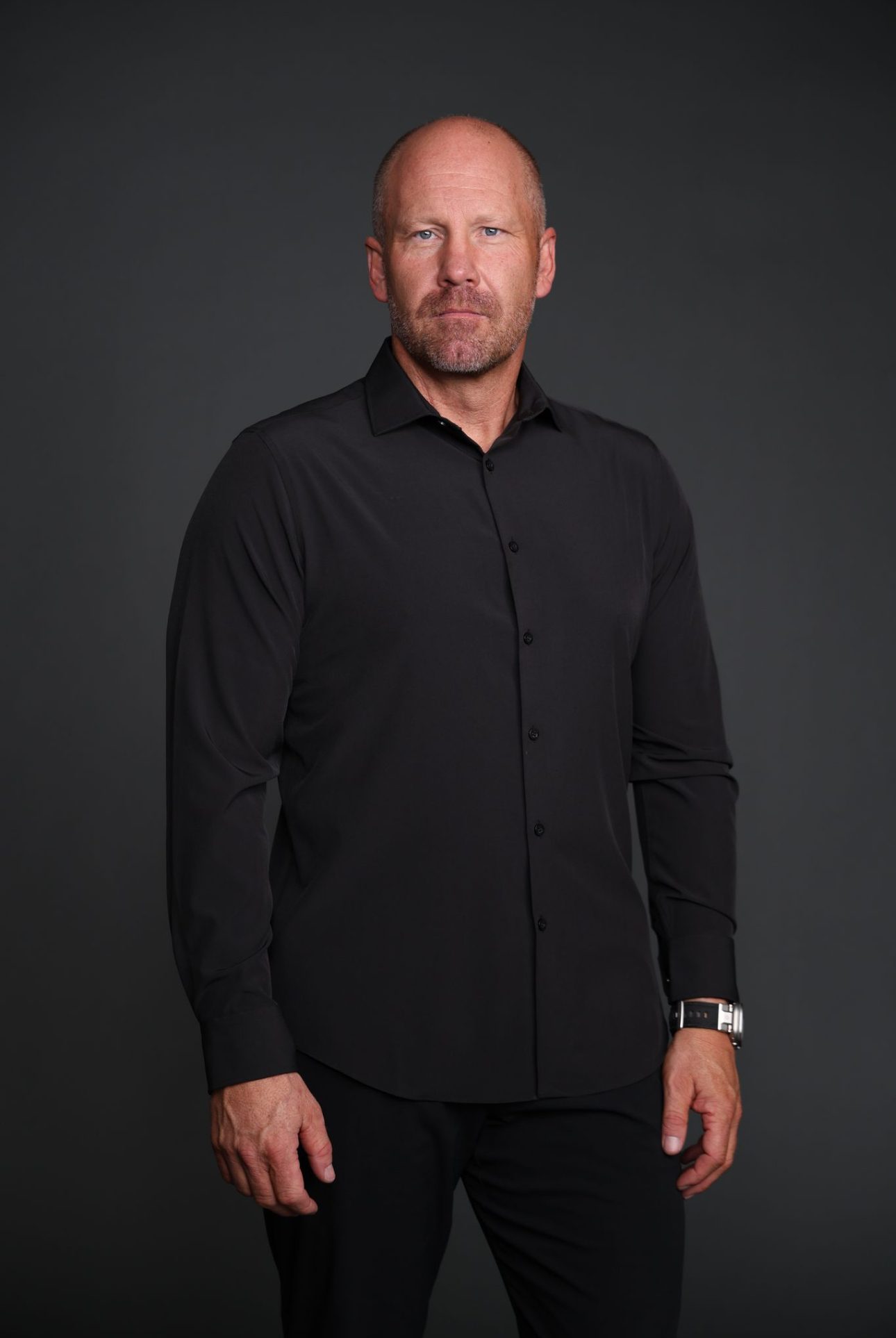
Centered leaders build companies that last. This is where leaders get centered.
You’ve got advisors for the company. Who do you have for you? A standing 1:1 cadence with Ryan Erickson across the business, the money, the personal, and the part underneath all of it — the same four pillars the diagnostics measure. Most leaders have a dozen people who want something from them and nobody who tells them the truth. No diagnostic required. Capacity deliberately limited.
Built by an operator, run like one.
Fulcrum & Co. is the diagnostic practice of Ryan Erickson — two companies built from zero and exited, both successful; COO of a 275-person organization whose revenue doubled in three years; 25+ years operating; 20+ CEOs mentored. The companies he mentors and diagnoses run from pre-revenue founders to a company doing $2 billion a year — including the company in the story, taken on at $50 million flat and tracking to $1.7 billion in year four. Every engagement routes through him. Every finding is reviewed before it reaches you. The firm is deliberately small, deliberately senior, and deliberately independent: no placement fees, no transaction compensation, no incentive to tell you anything but what your data says.

Something feels off. You can’t name it yet. That’s exactly what this is for.
Every finding sourced, and priced where the data supports it. Every action with an owner, a date, a metric, and what “done” looks like.
Ninety minutes with your whole leadership team: we quantify one dependency in your own numbers, then show you the fork — what to fix yourselves, and what a diagnostic would read. No fee.